Buried Beneath the Ruins, Only His Head Could Be Reached
When the ground shook and buildings began collapsing, there was little time to understand what was happening. Walls crumbled, concrete crashed to the earth, and familiar places disappeared beneath mountains of dust and debris. In the aftermath, rescue teams moved through the destruction searching for anyone who might still be alive. Somewhere beneath one of those piles was a dog. His body was trapped so deeply under dirt and rubble that rescuers could not simply pull him free. At first, they could barely reach him at all.
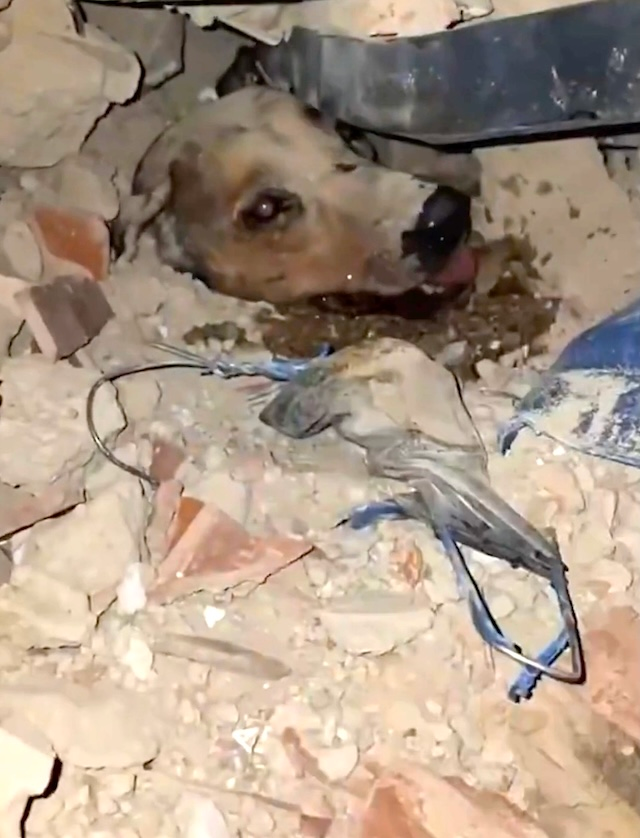
Carefully, the team began removing the debris surrounding the trapped animal. Every movement had to be deliberate. Pulling too quickly or disturbing the wrong piece of rubble could potentially cause more material to shift around him. Little by little, they cleared enough away to expose the dog’s head. He was still alive. After being buried beneath the wreckage with no way to escape, that alone was an extraordinary discovery.
Before They Could Free Him, They Gave Him Water
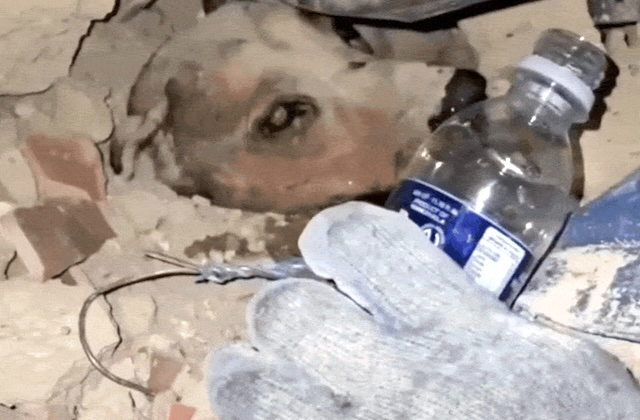
The dog’s body remained trapped, but rescuers could finally reach his face. One of their first acts was beautifully simple: they offered him water.
For an animal pinned beneath debris, frightened and exhausted, that drink represented more than relief from thirst. It meant someone had found him. He was no longer buried where nobody knew he existed. Human hands were now working around him, and the people above were determined to bring him back into the open.
He could not understand their words or know how long the rescue would take. He could only remain there while strangers carefully worked to remove everything holding him underground.
And they did not stop.
Inch by Inch, They Dug Him Back Into the World
There was no dramatic moment in which the rubble could simply be lifted away. Instead, the rescuers reportedly worked patiently by hand, clearing dirt and debris from around the dog’s body little by little. Each handful brought them closer to him. Each inch exposed meant another inch separating the trapped animal from freedom.
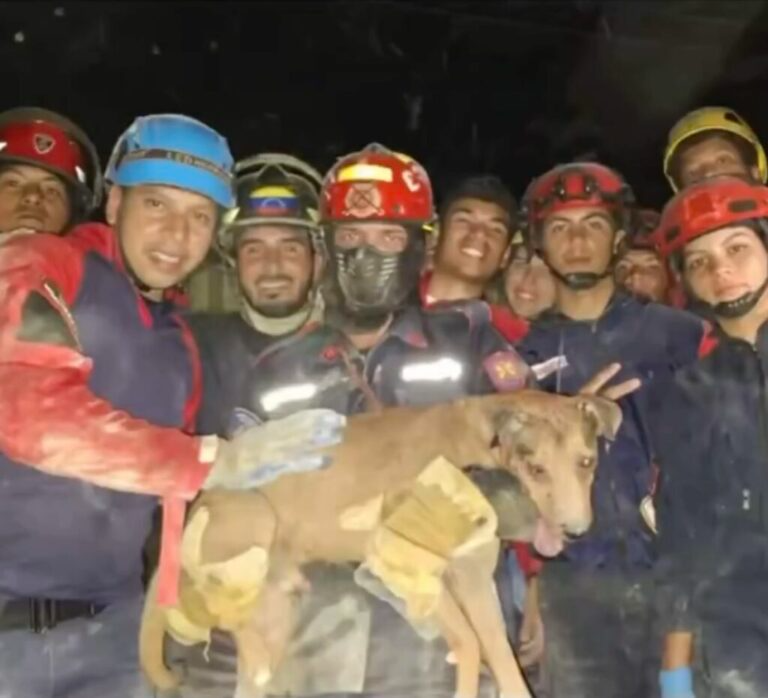
Eventually, enough rubble had been removed for rescuers to reach his body safely. After everything he had endured beneath the ruins, hands finally closed gently around him — not to restrain him, but to lift him away from the place that had nearly become his grave.
The dog was pulled free.
After being almost completely buried, he was finally above the rubble again.
In the middle of a disaster defined by everything that had been destroyed, rescuers had found one life they could still save.
In So Much Destruction, One Survivor Became a Symbol of Hope
Rescue workers reportedly described the dog’s survival as a “symbol of hope.” It is easy to understand why. After a major disaster, rescuers often work surrounded by scenes of devastating loss. Every collapsed structure can hold uncertainty. Every search can end either with the joy of finding life or the heartbreak of arriving too late.
Saving one dog could not undo the destruction surrounding them. It could not rebuild homes or return everything families had lost. But moments of survival matter precisely because they emerge from circumstances where hope can feel increasingly difficult to hold onto.
This dog had been hidden beneath the earth and debris, unable to free himself and entirely dependent on someone finding him.
Someone did.
And then they kept digging until he was safe.
Behind Every Rescue Is Someone Who Refuses to Stop Searching
Disasters do not distinguish between human lives and the animals who share those lives. Pets can become separated from families. Stray animals can become trapped without anyone knowing where to search for them. Injured animals may hide beneath damaged structures, frightened and unable to escape. That is why animal rescue organizations and emergency teams can play an important role in the aftermath, working alongside broader relief efforts to reach lives that might otherwise be overlooked.
According to the original account, Red de Apopa Canino, an animal rescue organization associated with Caracas, Venezuela, and affiliated with SPCA International’s Global Animal Rescue network, was among the groups connected with rescue efforts. The work of teams like these often continues long after the initial disaster, when cameras have moved elsewhere but injured, displaced, and frightened animals may still need food, shelter, veterinary treatment, and help reuniting with families.
The trapped dog’s rescue showed what that persistence can accomplish. He could not call out with words. He could not tell anyone precisely where he was. He could not dig himself free.
His survival depended on someone continuing to search.
He Couldn’t Dig Himself Out — So They Dug Until They Reached Him
Perhaps the most powerful part of this rescue was its simplicity. A dog was trapped. People found him. And once they knew he was alive, they refused to leave him beneath the rubble.
First, they uncovered his head.
Then they gave him water.
Then they continued digging.
Handful after handful, inch after inch, they removed the debris separating him from safety until there was finally enough space to lift him free.
For the rescuers, it was one life saved amid overwhelming destruction. For the dog, it was everything.
He would never know how much devastation surrounded the place where he was found. He would never understand why strangers later called his survival a symbol of hope.
He only knew that he had been trapped in darkness with no way out.
Then hands reached through the rubble.
Water touched his lips.
And those hands kept digging until the darkness finally gave way to daylight.
